Invoice Best Practices for Freelancers: Get Paid on Time, Every Time
The 12 invoice best practices every freelancer needs. From sending invoices the right way to handling late payments — build habits that protect your cash flow.
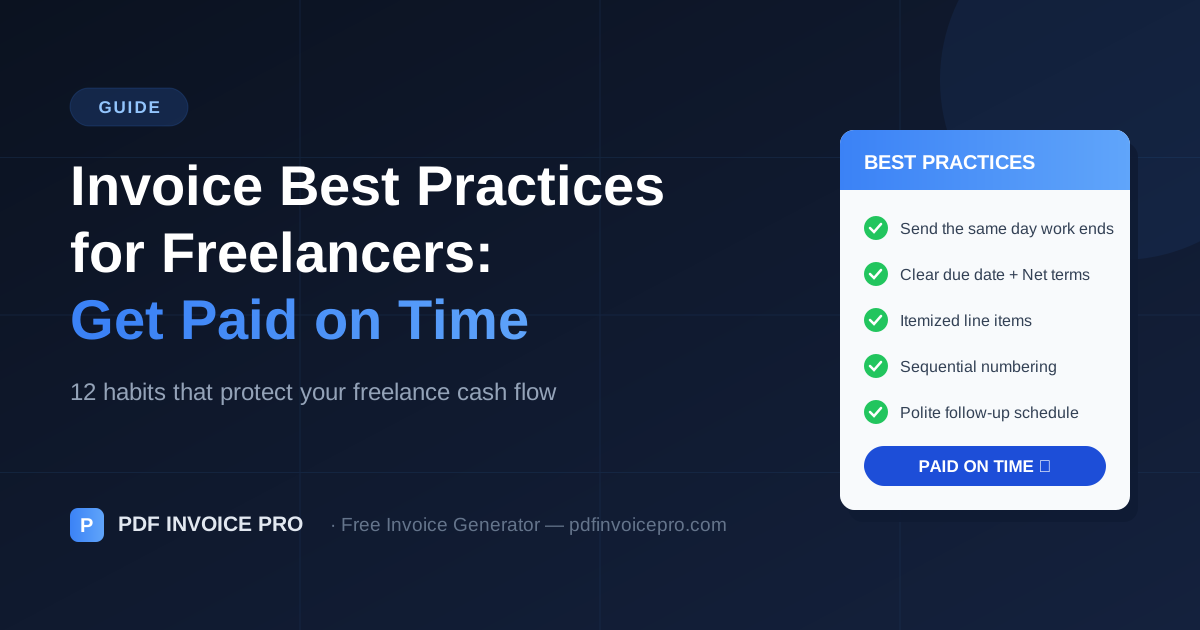
Why Most Freelancers Struggle to Get Paid on Time
Getting paid shouldn't be the hard part of freelancing. You did the work. You delivered the value. Yet for millions of freelancers, late payments and invoice disputes eat up hours every month.
The good news: most payment problems are preventable. They trace back to habits and systems — or the lack of them. Freelancers who get paid on time aren't luckier. They're more disciplined about a handful of practices most people skip.
Before diving in, make sure you have the foundations covered: how to create professional invoices.
According to FreshBooks research, freelancers who follow consistent invoicing habits get paid an average of 11 days faster than those who don't. These habits are learnable in a day.
1–3: Invoice Fast, Invoice Right
Practice 1: Invoice the Same Day You Deliver
Send your invoice the moment you deliver work — the same afternoon, not next week. Clients are most primed to pay when your work is freshest in their minds.
A week later, the excitement has faded and the invoice feels like an inconvenience. Immediate invoicing also signals that you run a professional operation.
Practice 2: Always Require a Deposit
Asking for 25–50% upfront isn't greedy — it's sensible business. Deposits filter out non-serious clients, cover your costs if a project falls apart, and shift the psychological dynamic so the client is invested in the outcome.
Make deposits non-refundable once work begins. State this clearly in your contract. Most professional clients expect it and won't push back.
Practice 3: Use a Professional Invoice Format
Your invoice should look like it came from a real business: your logo, a clean layout, clear line items, professional font. Avoid handwritten invoices, screenshot bills, or vague "please pay me" emails.
Never let a project start without a signed agreement that includes payment terms. A verbal agreement is almost impossible to enforce when a client disputes payment.
4–6: Payment Terms That Protect You
Practice 4: Set Terms Before You Start
Payment terms should be agreed in writing before you lift a finger on a project. Include them in your proposal, contract, and invoice. Answer three questions: When is payment due? What methods do you accept? What happens if payment is late?
Practice 5: Number Your Invoices Consistently
Every invoice needs a unique sequential number. Start at INV-001 and never reuse a number. This helps you track paid vs outstanding invoices and is required for proper bookkeeping.
Practice 6: Have a Clear Late Payment Policy
State your late payment fee in your contract and on your invoice. A standard rate is 1.5% per month on the outstanding balance. You don't have to enforce it every time, but having it written down gives you leverage and encourages timely payment.
7–9: Build a Follow-Up System
Practice 7: Follow Up Before the Due Date
A brief, friendly reminder 2–3 days before the due date — "heads-up that invoice INV-042 is due Friday" — dramatically increases on-time payment rates. It's not pushy; it's helpful. Most delayed payments aren't deliberate; they're forgotten.
Practice 8: Escalate Consistently When Late
When a payment is late, follow a clear escalation: polite reminder on day 1, firm reminder at day 7, formal notice at day 14, collections or legal action at day 30+. Don't skip steps and don't wait weeks before escalating.
Practice 9: Accept Multiple Payment Methods
Every payment barrier you remove gets you paid faster. Accept bank transfers, PayPal, credit cards, and local payment methods for international clients. The goal is to make it trivially easy to pay you.
Our free invoice generator includes a CRM dashboard showing the status of every client account. You can see paid, outstanding, and overdue invoices at a glance — no manual tracking needed.
10: Track All Outstanding Invoices
You can't chase what you can't see. Maintain a system — even a simple spreadsheet — tracking which invoices are sent, paid, and overdue. This is critical for managing income and cash flow.
We cover building a complete income tracking system in our guide on income tracking for freelancers. A good invoice tool handles this automatically so you don't have to.
11–12: Protect Your Business
Practice 11: Don't Start New Work for Non-Paying Clients
Do not continue delivering work for a client who hasn't paid a previous invoice. Address it professionally: "I noticed invoice INV-038 is outstanding. Could we resolve that before I proceed?" Most clients will pay immediately.
Practice 12: Review Your Process Quarterly
Every 90 days, audit your invoice process. Are payments coming in on time? Which clients pay late consistently? Are you leaving money on the table? Regular reviews let you fix problems before they compound.
The 12-Habit Checklist
Pick the 2–3 habits that address your biggest current pain points and build from there. The compounding effect is enormous over time.
- Invoice the same day you deliver work
- Require a 25–50% deposit before starting
- Use a professional invoice format (PDF)
- Set payment terms in writing before the project starts
- Number invoices consistently (never reuse)
- State a late payment fee in your contract
- Send a reminder 2–3 days before due date
- Follow up the day after a missed due date
- Accept multiple payment methods
- Keep a tracker of all outstanding invoices
- Don't start new work for non-paying clients
- Review your invoice process every quarter
Use our free invoice generator to implement a consistent, professional system starting with your very next client — 60 seconds, no account required.
Sources & Further Reading
Alex Carter is a freelance finance writer specialising in invoicing, cash flow management, and small business operations. He has written for independent contractors and agencies across the US, UK, and Australia.
Ready to create professional invoices?
Free, private, no account needed. Create your first invoice in 60 seconds.
Create Free Invoice