Getting Started as a Freelancer: Your Complete First-Year Roadmap
Everything you need to know to start freelancing: choosing a niche, finding clients, setting rates, invoicing, and building a sustainable solo business in year one.
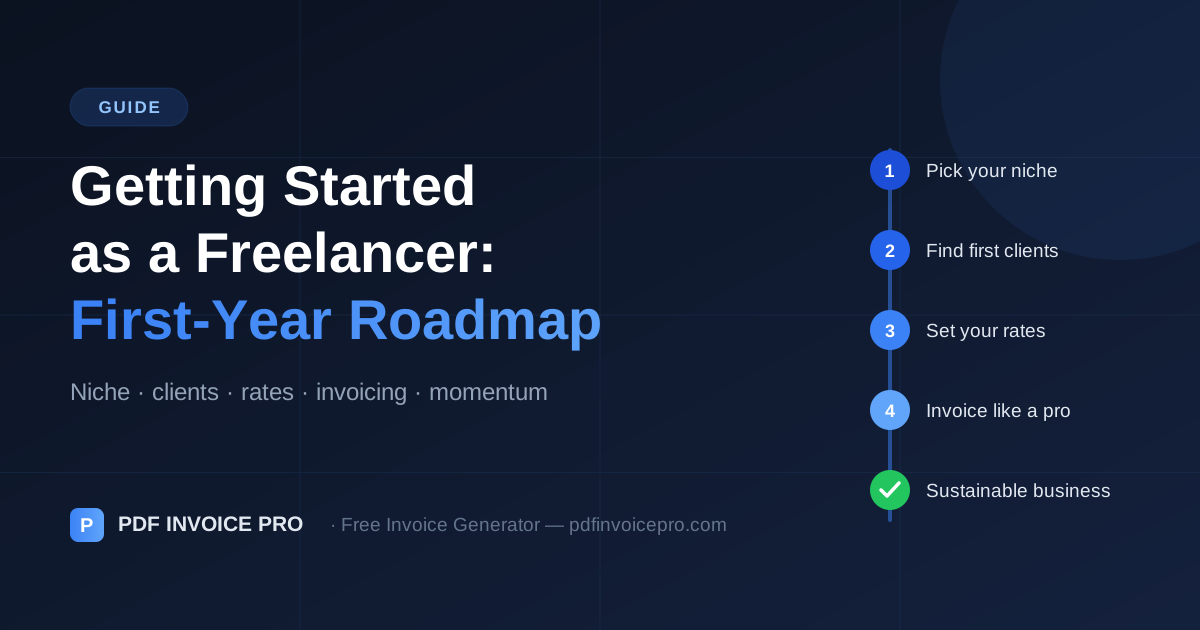
The Honest Truth About Starting as a Freelancer
Freelancing is not passive income. It's not easy money. But it is one of the most direct paths to building meaningful income on your own terms — if you approach it with a clear strategy rather than winging it and hoping clients appear.
Freelancers who succeed in year one treat their practice as a business from day one: they pick a clear niche, price appropriately, build systems for finding clients, and get invoicing and finances organized from the start. Those who struggle do the opposite — offering everything to everyone, undercharging, running their business from a personal email account.
Choose Your Niche (Then Narrow It Further)
Specialists earn more, win clients more easily, and build reputations faster than generalists. "I do design" is weak. "I create SaaS product interfaces for B2B software companies" is powerful — it tells a specific client immediately that you're their person.
Start with your strongest skill. Then ask yourself three questions:
- Which industry or type of client needs this skill most?
- Which client has the budget to pay well for it?
- What type of work do I find most engaging?
The intersection of those three answers is your niche. Don't worry about being "too narrow" — you can always expand later. Narrowness wins you your first clients because you speak directly to their specific problems.
The Freelancers Union reports that the majority of first freelance projects come from warm introductions — people who already know you. Mine your network before building a website.
Set Your Rates Before You Take Your First Client
Pricing is where most new freelancers make their first big mistake: they look at competitors, feel intimidated, and underprice. Or they pick a number out of thin air.
Instead, calculate your rates from your financial needs:
- Start with your target monthly income
- Add estimated business expenses
- Add 25–30% for taxes
- Add time for non-billable work (admin, pitching, meetings)
- Divide by realistic billable hours per month
That's your minimum hourly rate. Then research market rates on Upwork, in professional communities, and by asking peers. Our guide on pricing your services correctly covers this in much more depth.
Find Your First Clients
Before creating a website or joining a freelance platform, reach out directly to people who already know you:
- Former employers who might have freelance projects
- Former colleagues who now work at companies that need your skills
- Friends in relevant industries
- Professional connections on LinkedIn
Trust is already established with these people. You're not a stranger on the internet — you're someone they know and respect. After mining your existing network, set up profiles on Upwork or relevant platforms. The Upwork blog for new freelancers has excellent practical guidance.
Set Up Your Business Systems
Before your first project starts, get these four systems in place:
Business Bank Account
Open a dedicated business checking account. Route all client payments through it. Pay all business expenses from it. This single step saves enormous time and creates clean records from day one.
Contract Template
A basic freelance contract covering: scope of work, payment terms, deposit requirements, revision policy, and intellectual property rights. Free templates available at the Freelancers Union and Nolo.com.
Invoicing System
Set up professional invoicing before sending your first invoice. A polished PDF invoice looks dramatically more credible than a Word document. Our free invoice generator takes 60 seconds to set up. Review invoice best practices before your first billing cycle.
Time Tracking
If billing by the hour, track time from day one with Toggl or Harvest. Your time records also reveal how long projects actually take, helping you price future work more accurately.
Manage Your First Year Expectations
Year one is a learning year. You'll take on projects that turn out poorly defined. Some clients will be difficult. You'll probably underprice something and overprice something else.
This is normal and valuable. Every difficult project teaches you what to include in your contract next time. Every underpriced project clarifies what your time is actually worth.
Treat every year-one challenge as tuition. You're learning how to run a business, not just how to do your craft. The expensive mistakes you'll avoid in year two are the lessons from year one.
Plan Ahead for Taxes — From Payment #1
This is the part most new freelancers ignore until it's too late. As a self-employed person, you owe self-employment tax (15.3%) plus income tax on your profits.
From your very first payment, set aside 25–30% in a separate savings account. Make quarterly estimated payments (April, June, September, January) to avoid penalties — missing these results in underpayment charges even if you pay in full in April. Our article on tax tips for invoice documentation covers this in detail.
First-Year Freelancer Checklist
- Identify your specific niche (not "I do design" — narrow it)
- Calculate your minimum hourly/project rate from financial needs
- Research market rates in your niche
- Reach out to 10 warm contacts before building a website
- Open a dedicated business bank account
- Create a contract template with payment terms
- Set up professional invoicing (PDF, not Word)
- Start a time tracking app if billing hourly
- Set aside 25–30% of every payment for taxes
- Set up quarterly estimated tax payment reminders
Sources & Further Reading
Alex Carter is a freelance finance writer specialising in invoicing, cash flow management, and small business operations. He has written for independent contractors and agencies across the US, UK, and Australia.
Ready to create professional invoices?
Free, private, no account needed. Create your first invoice in 60 seconds.
Create Free Invoice