Invoice vs Receipt vs Bill: What's the Difference? (With Examples)
Invoice vs receipt vs bill explained simply. When each document is used, what it must contain, why the difference matters for taxes — with real examples.
The Quick Answer
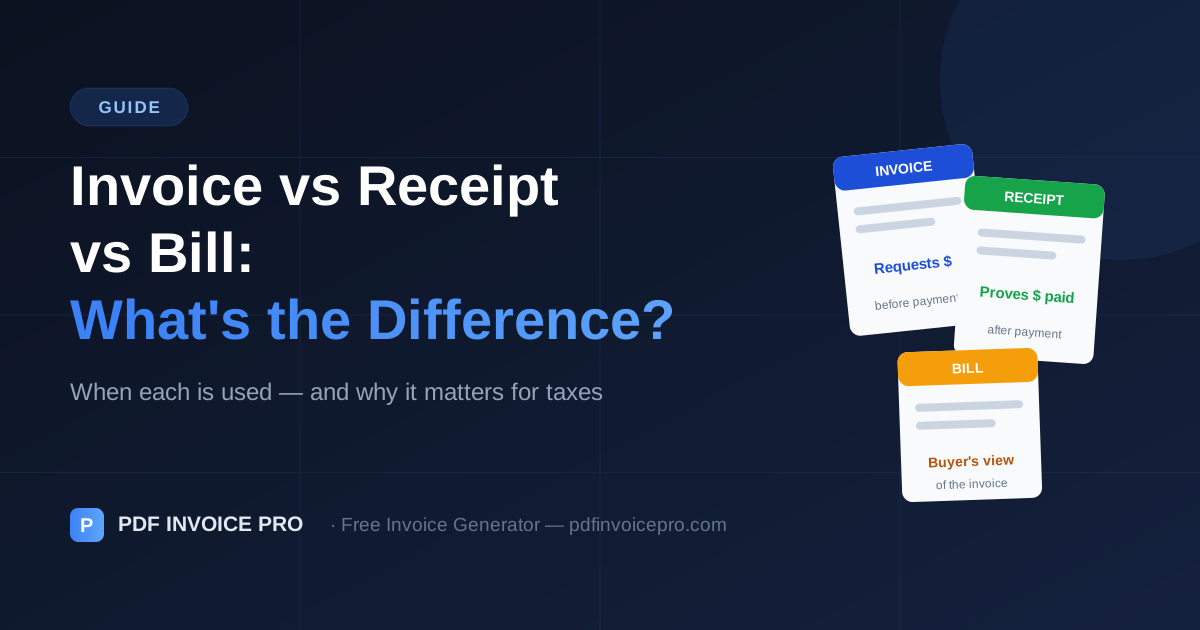
An invoice asks for money. A receipt proves money was paid. A bill is just an invoice from the buyer's point of view. Same transaction, three names — depending on direction and timing.
What Is an Invoice?
An invoice is a formal request for payment a seller sends after delivering goods or services (or per contract milestones). It itemizes what was provided, states how much is owed, and sets a due date and payment terms. It creates an account receivable for you and establishes the legal basis to collect. A complete invoice carries a unique number, both parties' details, line items, tax, and total — the full checklist is in our guide to how to make an invoice.
What Is a Receipt?
A receipt is proof that payment happened. It is issued at or after the moment of payment and states what was paid for, how much, when, and by what method. Receipts close the transaction loop: the client files it as evidence of the expense; you keep a copy as evidence the invoice was settled.
When a client pays, re-issue the original invoice stamped "PAID — [date, method]". One document then serves as both the record of the sale and the proof of payment.
What Is a Bill?
A bill is not a different document — it's perspective. When you send your client an invoice, their accounting team records it as a bill to pay. That's why accounting software shows "Invoices" (money coming in) and "Bills" (money going out) as separate tabs. In casual usage, "bill" also describes immediate-payment requests like a restaurant check or utility statement.
Why the Difference Matters for Taxes
The distinction is not pedantry — it decides what you can prove. Invoices document income: they support the revenue you report. Receipts document expenses: without them, deductions can be disallowed in an audit. Keep both, organized by year, for at least three years. Our guide to tax tips for invoice documentation covers retention rules and audit triggers in detail.
A Real Transaction Flow
A web designer finishes a $1,800 project on March 3. She sends an invoice (INV-2026-031, Net 15) the same day. Her client's finance team logs it as a bill due March 18. Payment arrives March 14, and she sends back the invoice marked PAID as the receipt. One transaction — three document roles, each with a clear job.
Need the first piece of that flow? Create the invoice in under a minute with our free invoice generator — no account, no watermark.
Sources & Further Reading
Alex Carter is a freelance finance writer specialising in invoicing, cash flow management, and small business operations. He has written for independent contractors and agencies across the US, UK, and Australia.
Ready to create professional invoices?
Free, private, no account needed. Create your first invoice in 60 seconds.
Create Free Invoice